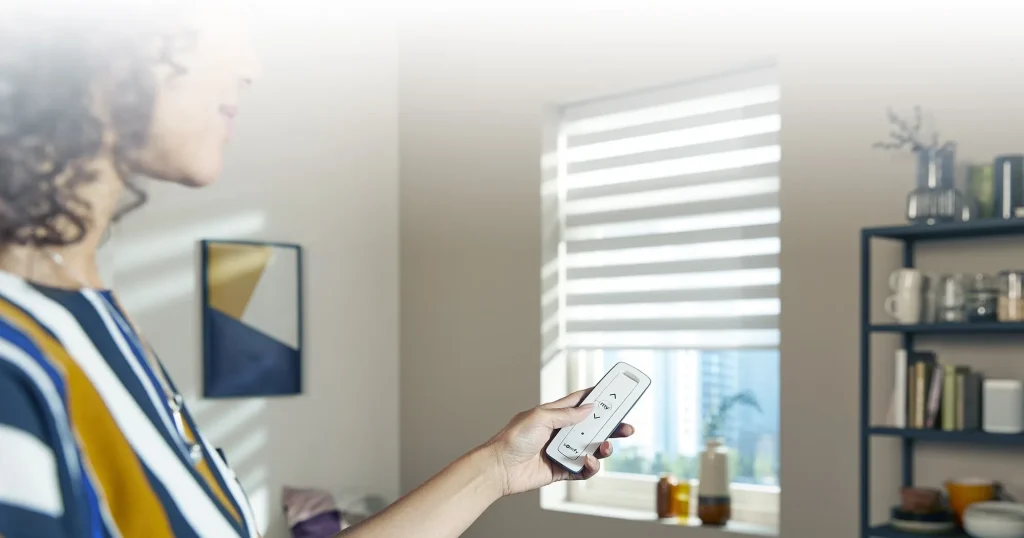

Motorizing a shade is one of the simplest upgrades you can make to a home — but only if the motor matches the shade. Three decisions matter: how much it can lift, how it’s powered, and how you’ll control it.
1. Torque: match the motor to the shade
Torque is the motor’s lifting power, measured in Newton-metres (Nm). Heavier fabric and wider shades need more. Weigh your fabric and bottom rail, then add a 20% safety margin.
2. Power source: battery, DC or AC
If there’s no power at the window, battery is the answer — a charge lasts months, and a small solar panel can make it indefinite. Hardwired DC suits new builds; AC is best for commercial spaces with frequent use.
“Most retrofits don’t need an electrician. Battery motors changed that.”
3. Control protocol
RF works straight out of the box with a remote. Choose Zigbee if you use a smart-home hub, or Matter if you want native support across major ecosystems without a bridge.
4. Checking fit
Measure the inside diameter of your roller tube. KA-series motors fit 38–40 mm round tubes directly, and adapter kits cover most other profiles up to 50 mm.